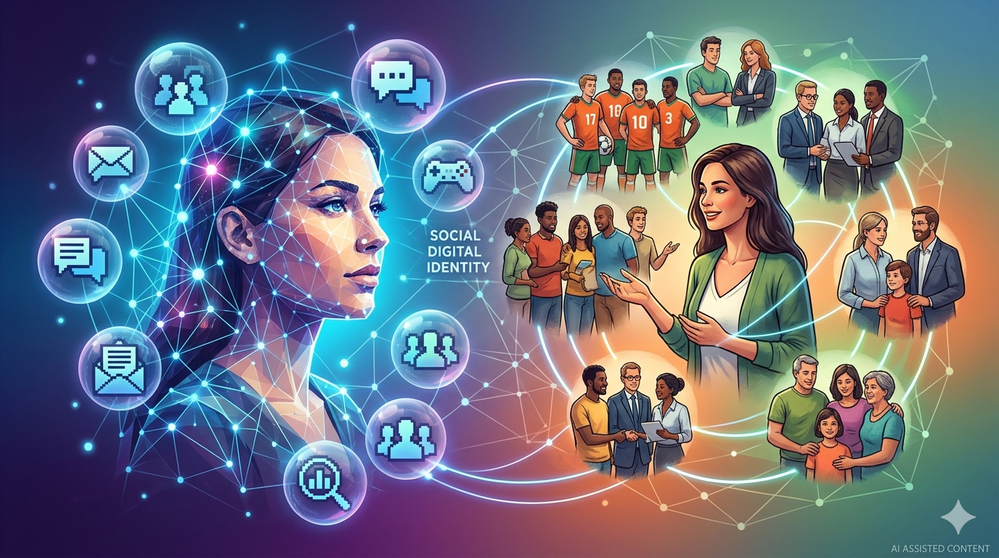
A core friction in Social Science pedagogy in 2026 is the transition from studying societal bias to studying algorithmic propagation. Traditionally, social science students studied how people are biased. They looked at how human history, culture, and personal prejudices led to unfair treatment of certain groups. The "enemy" was human behavior and social structures (like laws or hiring practices). But now, the focus has shifted to how machines take those human biases and supercharge them. In fact, a 2026 study in PNAS demonstrates a cycle of bias where search algorithms recapitulate societal inequalities, which in turn guides human decision-makers to act in ways that reinforce those disparities. An algorithm doesn't just reflect bias; it learns from it and then spreads it to millions of people at lightning speed.
This means that the tools students use for research are active participants in the social construction of reality. Traditionally, a library database or a search engine was seen as a neutral, virtual “shelf” of books, data, and information. Now, because these tools use AI to rank, hide, or summarize information, they are actually building the student’s reality while they search. They aren't just showing the world. They are constructing it.
To avoid participating in the cycle of algorithmic bias, students must now be taught to question the information itself. An algorithm skeptic doesn't just ask, "Is this information true?" they ask, "Why did the algorithm decide to show me this specific information right now, and what bias might be implicit within it?"
Referenced Research: