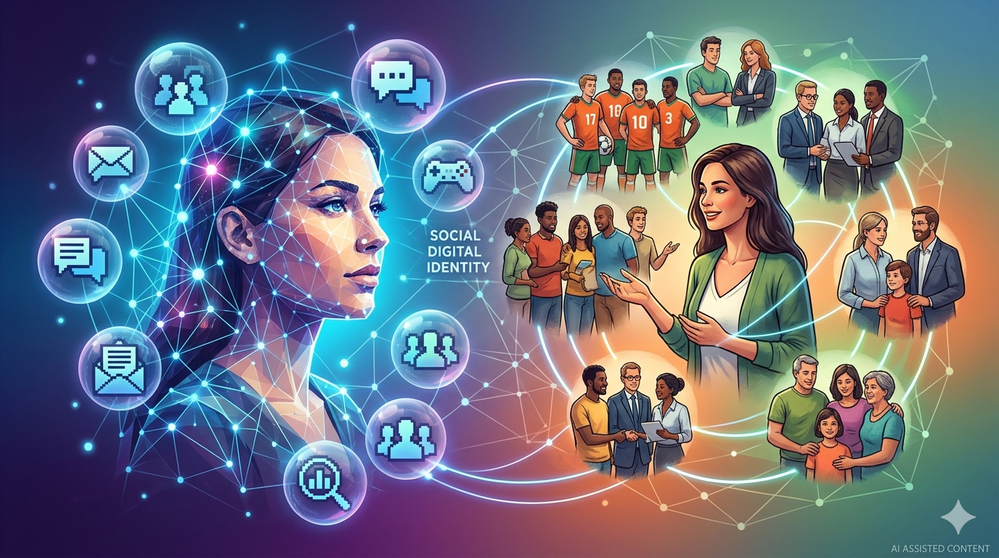
In an increasingly globalized and digital world, the immediate physical environment—the neighborhood—remains a critical yet often overlooked laboratory for understanding human behavior and social systems. Recent perspectives suggest that the simple act of getting to know a neighborhood is not merely a civic exercise but a sophisticated methodological approach to social science. By moving beyond macro-level data and immersion in digital networks–basically getting out from behind a screen–humans can uncover the intricate, invisible infrastructures of trust, reciprocity, and friction that define modern urban life.
An interesting and unique field of study for those in the social sciences, the neighborhood serves as a microcosm for broader systemic challenges, from economic inequality to public health outcomes. Engaging with these local ecosystems requires one to develop a spatial literacy—an ability to read the history and power dynamics written into streetscapes and community hubs.
As social sciences strive for greater policy relevance, and as humans continue to live and coexist in various forms of neighborhoods, the curation of the ability to translate these hyper-local insights into scalable frameworks becomes essential.
Source: